Exhibitions
MOMENTA x VUCAVU
"Underneath Big Skies"
Momenta Biennale of Contemporary Art presents Underneath Big Skies, a video program available from April 28 to May 12, 2026. Curated by Mariana Muñoz Gomez, this project brings together emerging and established artists whose works explore the relationships between human beings, environments, and territories. As part of the Biennale’s parallel initiatives, it highlights the diversity of current contemporary practices.
Mariana Muñoz Gomez is an artist, writer, and curator. Their art practice is often lens-based, involving a variety of media. Their practice explores place, identity, and language, and how these topics intersect with coloniality, temporality, and relationality. Mariana has been involved with various Winnipeg collectives and is currently a managing co-editor of Carnation Zine.
Visit Mariana’s website at here
Programming:
- Midnight Migrations, dir Darcy Tara McDiarmid & Chantal Rousseau, VP (17min 31sec)
- Collapsing Wave Function, dir Tyson Houseman, VP (6min 50sec)
- A Beaten Path, dir Toby Gillies & Natalie Baird, VP (3min)
- Winipek, dir James Dixon, VP (9min 33sec)
- on the day it started there wasn't a cloud in sight, dir Christina Battle, CFMDC (5min 30sec)
- Extractions, dir Theo Jean Cuthand, CFMDC (15min 12sec)
- A Valley in Twain, dir Kathryn Boyer, VP (2min 45sec)
- Shea, by NASRA, dir Effy Adar, WFG (2min 40sec)
- When Land and Body Merge, dir Lindsay Delaronde & Jaime Black, VP (8min 34sec)
- River Revelations, dir Darcy Tara McDiarmid & Chantal Rousseau, VP (5min 3sec)
Mariana Muñoz Gomez's essay
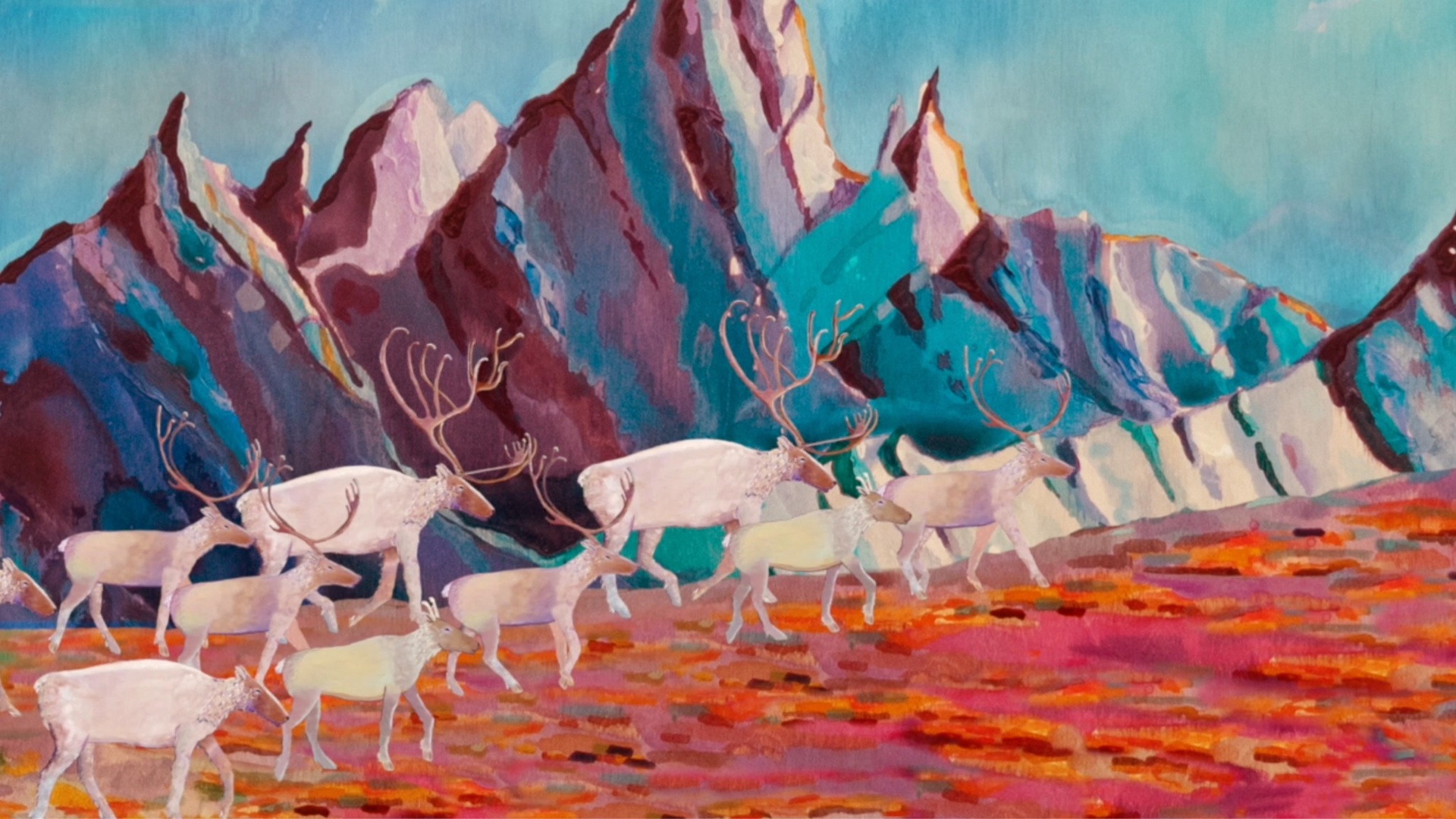
A herd of caribou travels across various seasons and landscapes. The subconscious of a forest glimmers. Thistles persist despite concrete. A heart yearns for relationship and for home. Pauses among fields of wheat, hay bales, and machinery recall previous disasters. Anxieties surface as land exploitation is connected to considerations about having children. A home that was lost to displacement is revisited. A shea tree’s butter transports intergenerational memories for a displaced family. Two people explore their relationships to land as they connect across distance. A crow takes us to a river where many beings swim, walk, hunt, watch, and fly.
I began my research for this program with a focus on the prairies or perspectives from prairie filmmakers. However, bookending this list of films are two videos from the Yukon by Darcy Tara McDiarmid and Chantal Rousseau. Watching the caribou in Midnight Migrations made me recall that caribou migrate over large distances: varying caribou ranges cross from the Yukon, Northwest Territories, and Nunavut into the prairie provinces of Alberta, Saskatchewan, and Manitoba. Feeling pulled to the quiet focus of Midnight Migrations on the caribou’s relationships to many places they live on, I brought together the films in Underneath Big Skies under a theme of human and non-human relationships to place.
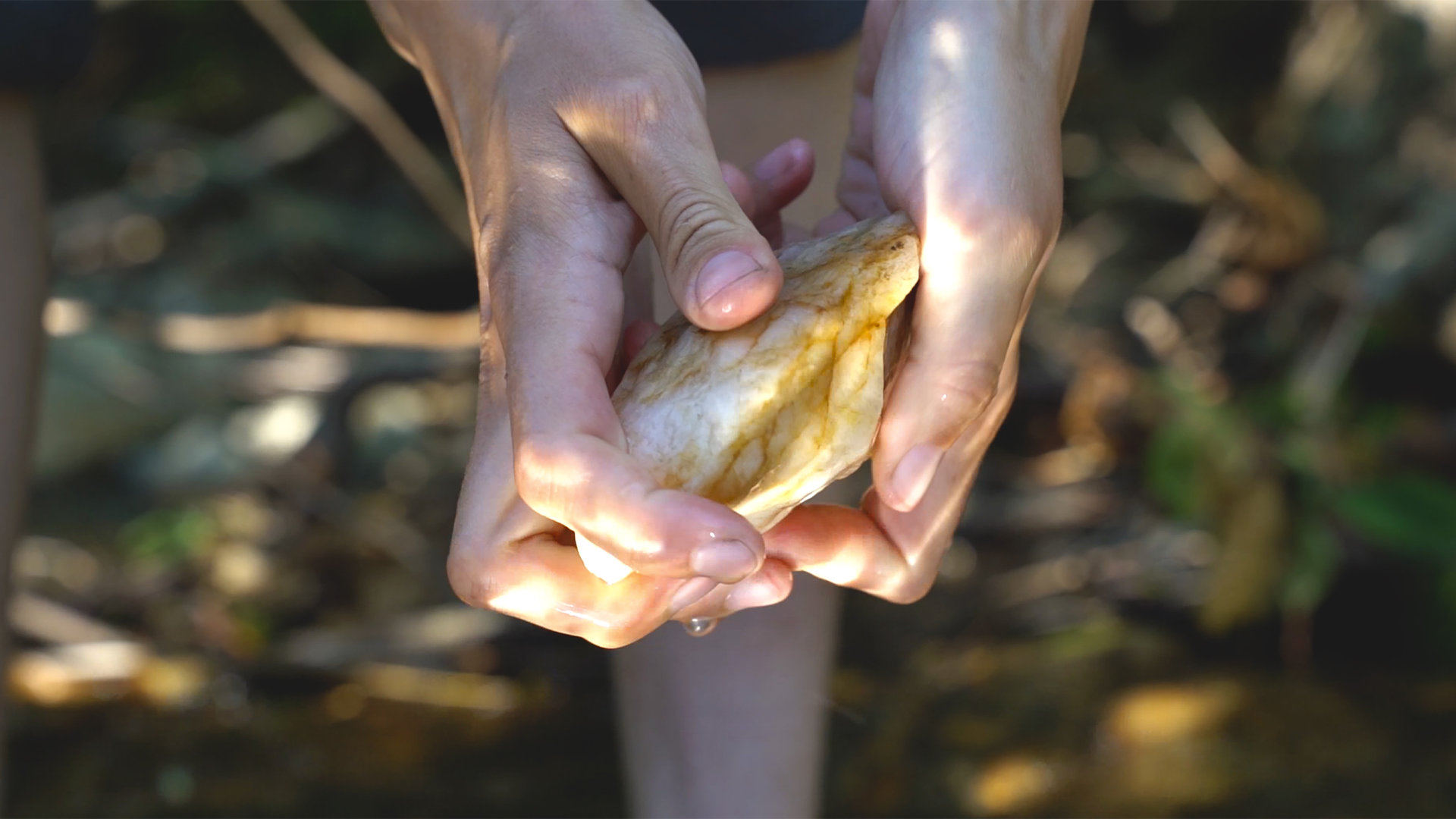
Tyson Houseman’s Collapsing Wave Function mirrors the dark skies that open and close Midnight Migrations as he imagines what plants may dream about and what their relationship to time is. Toby Gillies and Natalie Baird’s stop-motion video, a beaten path, zooms in to suggest the movement of plants among harsh urban terrain.
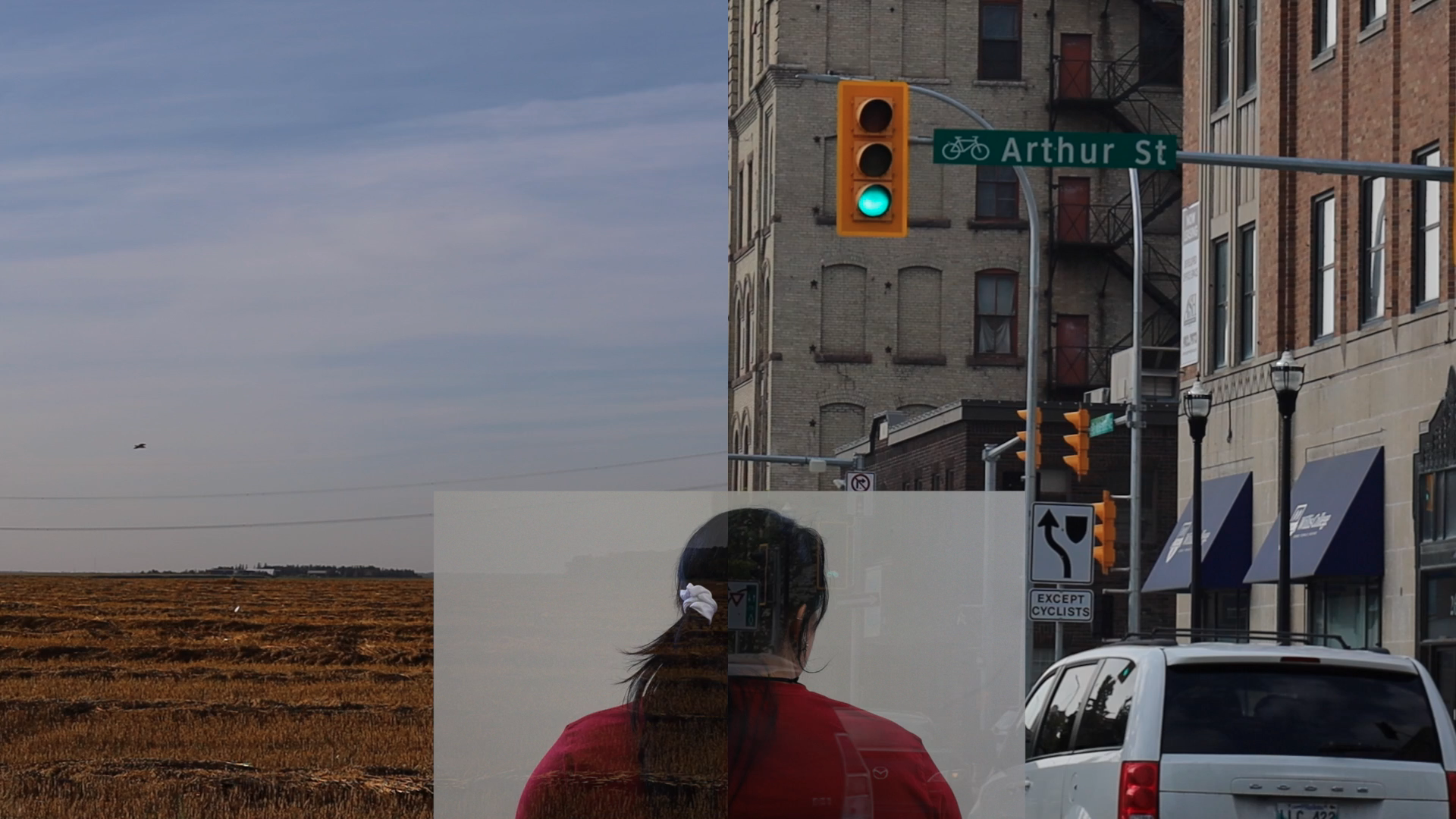
In Winipek, landscapes both encircling and inside the city of Winnipeg are on screen. This film by James Dixon speaks directly to a place and about a sense of place and belonging, processing a relationship that has been ruptured by colonization. The places pictured in Winipek are emotionally loaded, fraught with loss and yearning.
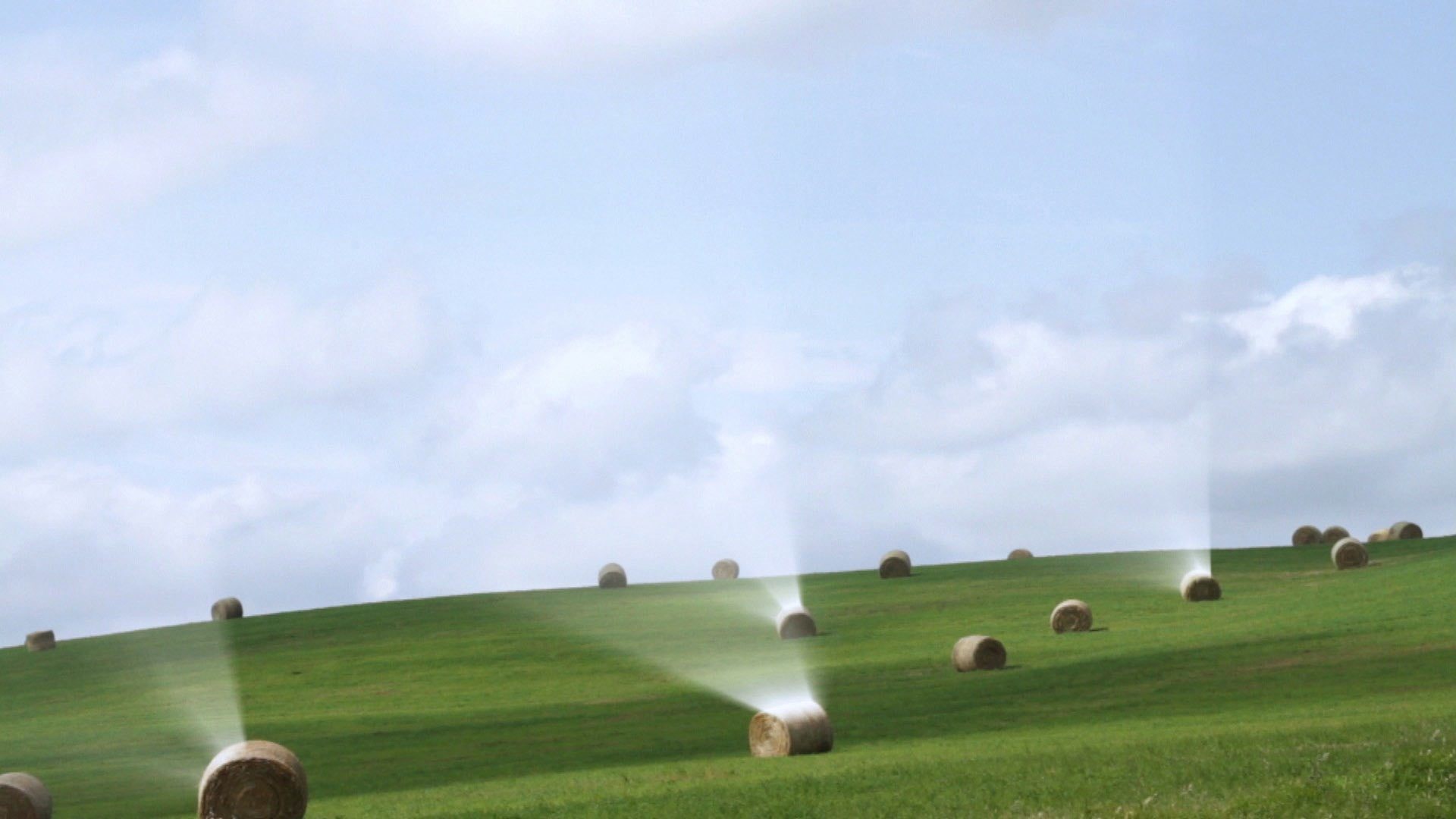
On the day it started there wasn’t a cloud in sight features typical prairie landscapes: tall grasses, grain bins, and big blue skies. This video by Christina Battle juxtaposes the prairies from points in time almost one hundred years apart. The largely still imagery suggests calm, but this is offset by text that recalls drought conditions from the 1930s as recorded in Saskatchewan’s archives.
Theo Jean Cuthand’s Extractions makes use of found footage, including archival footage of nuclear weapons detonating and footage of explosives used on sites of resource extraction. Cuthand connects the extraction industry to other expressions of colonization and capitalism: misogyny, homophobia, and government foster care systems that extract Indigenous children from their families. As the images flash across the screen and Cuthand expresses his anxieties, I can’t help but see links to multiple genocides being carried out today by colonial forces including the USA and Israel.
Katherine Boyer’s engagement with her family’s displacement from the Souris Valley–now McDonald Lake–is documented in A Valley in Twain. The lake holds familial memories as it contains the place that was once a home to her family in its waters. In Effy Adar’s Shea, by Nasra, a shea tree (in the form of butter) accompanies a family displaced far from their home. The shea recites poetry and remembers ancestors as the family dances between the plants of a new home.
Lindsay Delaronde and Jaime Black connect across distance in When Land and Body Merge, also collaborating with the land. Text included in the video sits between videos of their actions, connecting their inner thoughts to the corporeal, the physical, and to each other.
The river in McDiarmid and Rousseau’s River Revelations resonated with me as a Winnipeger, although it is different from the ones I know in Winnipeg. The artists illustrate a variety of beings’ relationships to place and speak to relationships across time in River Revelations. As this video closes by taking us to a night sky similar to the one from the beginning of this program, it brings to mind the interconnection that the sky can symbolize across distance, time, and seemingly disparate ecologies.
OnTheDayItStarted_Battle_1080
Dixon-winipekB1920
rousseau-midnightmigrationsA1920
houseman-collapsing-A-1920